
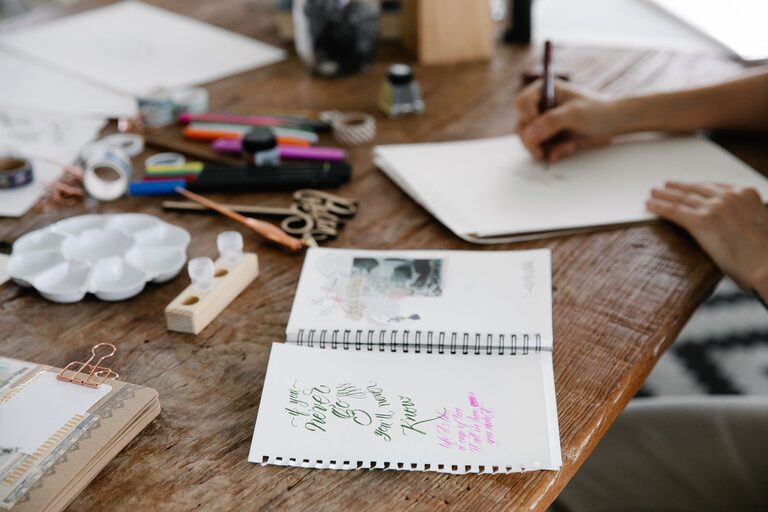
Creativity Is a Daily Practice
Creativity is often mistaken for a special talent that belongs only to artists, writers, or musicians. In reality, creativity is a useful way of thinking that anyone can practice. It helps you find new ideas, solve everyday problems, and look at familiar things from a fresh perspective.
You do not need a large block of free time or an elaborate workspace to become more creative. Small, regular activities can make a difference. The key is to focus on curiosity and experimentation rather than perfection.
Here are simple ways to bring more creativity into your everyday routine.
Start With Five Minutes
A short creative session is often easier to maintain than a large, ambitious project. Set a timer for five minutes and choose one small activity. You might write a few sentences, sketch an object, arrange a group of photos, or create a quick list of ideas.
The goal is not to produce something impressive. The goal is to begin.
Try these five-minute activities:
- Write down everything you can see from your window.
- Sketch a mug, shoe, plant, or other nearby object.
- Think of five different uses for a common household item.
- Describe a familiar place using all five senses.
- Make a short list of things you would like to learn.
Once you begin, you may naturally continue for longer. If you stop after five minutes, the practice still counts.
Keep an Ideas Notebook
Carry a small notebook or use a notes app to collect observations, questions, phrases, and possible projects. Ideas often arrive at unexpected times, so having a place to save them prevents them from being forgotten.
Your notebook does not need to look organized. It can include:
- Interesting words or phrases
- Questions you would like to explore
- Descriptions of people, places, or objects
- Ideas for stories, meals, designs, or projects
- Small problems that might have creative solutions
Review your notes once a week. Look for connections between separate ideas. A note about a childhood memory might connect with a photograph you took recently. A question about gardening might inspire a writing project or a new weekend activity.
Change Your Routine
Familiar routines are comfortable, but small changes can help you notice more. Take a different route on your walk, sit in a new place, listen to an unfamiliar style of music, or shop at a different market.
These changes do not need to be dramatic. Even minor adjustments can make ordinary surroundings feel new again.
You can also change the order of a familiar task. Prepare breakfast differently, rearrange a shelf, or use a new color combination when choosing clothes. The purpose is to become more aware of your choices and surroundings.
Ask Better Questions
Questions are powerful tools for creative thinking. When you encounter a routine task, try asking questions that invite more than one answer.
For example:
- What is another way to do this?
- What would happen if I made this simpler?
- How might a child approach this task?
- What could I combine to create something new?
- What part of this process could be more enjoyable?
You can use these questions at home, at work, or while planning personal projects. They encourage you to move beyond the first solution and consider different possibilities.
Make Something From Everyday Materials
Creative practice does not require expensive supplies. Use materials that are already available, such as paper, cardboard, fabric, packaging, old magazines, or spare buttons.
Try making a collage, paper sculpture, greeting card, bookmark, or simple decoration. If you prefer digital projects, combine photos into a themed collection, design a simple poster, or create a short video using your phone.
Working with limited materials can be helpful because it gives you clear boundaries. Instead of wondering what to buy, you can focus on what is possible with what you have.
Practice Creative Writing
Writing is one of the easiest creative activities to practice anywhere. You do not need to work on a novel or write polished poems. Simple prompts can help you get started.
Try one of these ideas:
- Describe a rainy day without using the word “rain.”
- Write a conversation between two objects in your room.
- Begin with the sentence, “When I opened the door, I found…”
- Describe a familiar person from the viewpoint of a stranger.
- Write about a memory using only short sentences.
Write quickly and avoid editing while the ideas are flowing. You can revise later if you want. During the first draft, focus on discovery rather than correctness.
Use Constraints to Spark Ideas
Having unlimited choices can make it difficult to begin. Constraints give your creativity a clear direction.
You might decide to draw using only two colors, write a story in 100 words, take photographs of only circular objects, or prepare a meal using five ingredients. A simple rule can turn an ordinary task into a creative challenge.
Try setting a daily constraint such as:
- Use one new word in a sentence.
- Take one photograph from an unusual angle.
- Draw without lifting your pencil from the page.
- Create something using only recycled materials.
- Find three different solutions to a small problem.
Constraints are not meant to limit your imagination. They give it a starting point.
Notice and Collect Inspiration
Pay attention to details that usually pass unnoticed. Look at building signs, doorways, shadows, textures, packaging, and natural patterns. Listen to the sounds around you. Notice the way colors work together in a shop window or garden.
You can create an inspiration folder with photographs, saved articles, color ideas, interesting designs, or lines from books. Keep it as a source of possibilities, not a collection to copy. When you need a starting point, browse through it and ask what new idea it suggests.
Make Room for Play
Play is an important part of creativity because it removes pressure to be useful or perfect. Try an activity simply because it looks enjoyable. Build something, doodle, make up a silly name, rearrange objects, or experiment with an unusual combination.
Give yourself permission to make work that will never be shared. Private experiments are valuable because they allow you to take risks without worrying about other people’s opinions.
Share Your Work Selectively
Sharing can provide encouragement and helpful feedback, but it does not have to happen immediately. Finish a small project and decide whether you want to show it to a friend, post it online, or keep it for yourself.
If you ask for feedback, be specific. Instead of asking whether someone likes your work, ask what detail stood out or what part was easiest to understand. Clear questions often lead to more useful responses.
Build a Sustainable Creative Habit
The best creative routine is one you can continue. Choose a time and activity that fit naturally into your day. You might write during your morning coffee, sketch during lunch, or collect ideas before bed.
Keep your expectations realistic. Some days will produce exciting results, while others may feel ordinary. Both kinds of days are part of the process.
Start small, stay curious, and allow yourself to experiment. Creativity grows through regular attention. With just a few minutes each day, everyday moments can become opportunities to notice, explore, and make something new.